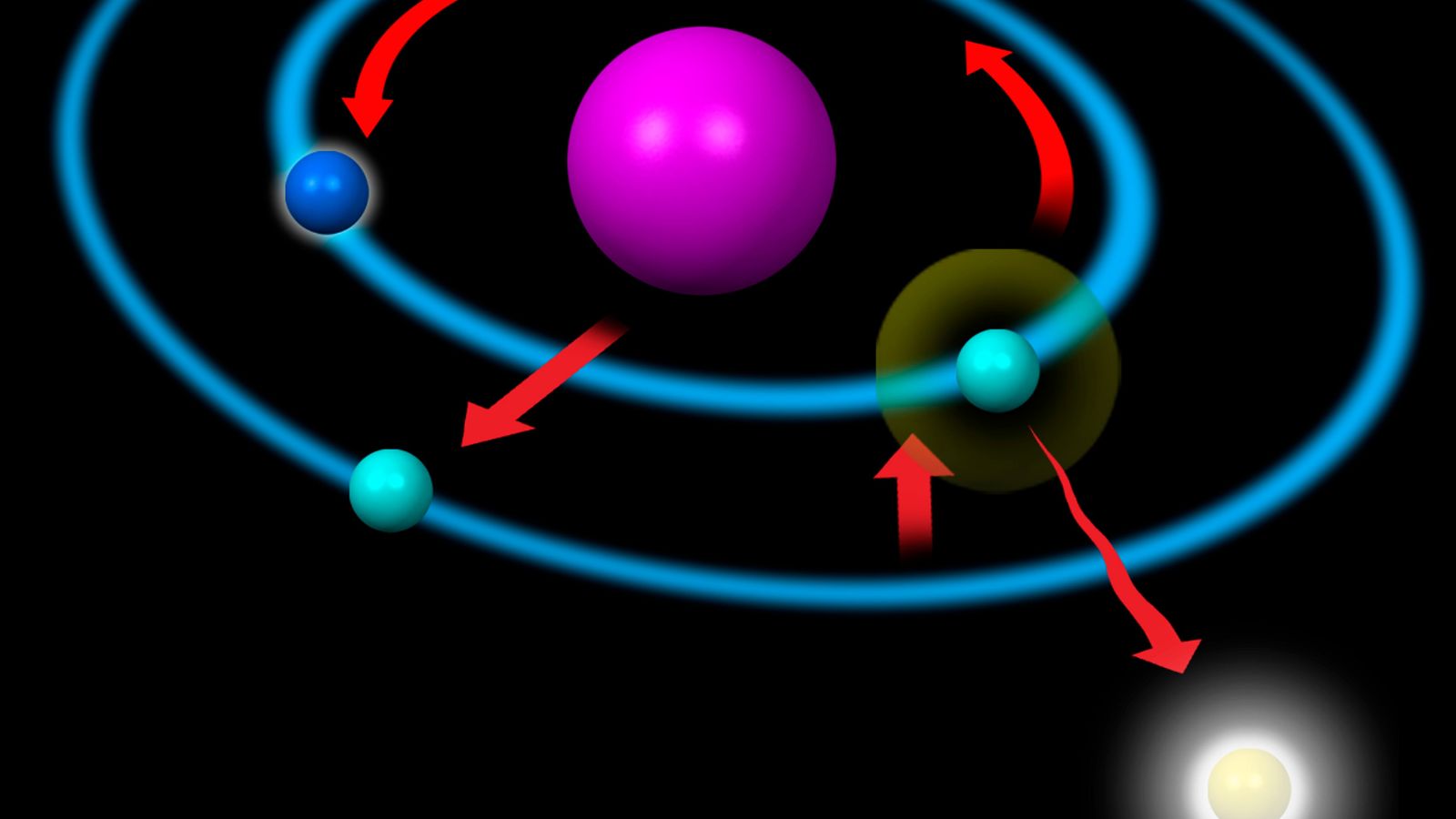
Arctic photon technology refers to single-photon detection, quantum photonics, and light-based sensing systems engineered to perform in extreme cold environments. These systems are central to advances in quantum computing, lidar, fiber-optic communication, and deep-space sensing. Arctic conditions—whether natural or cryogenically controlled—actually enhance photon detector performance, making cold-climate photonics one of the most promising frontiers in modern physics and applied technology.
You’ve probably never thought much about photons. They’re just light, right? Tiny packets of energy bouncing around everywhere.
But here’s the thing: a single photon—detected at exactly the right moment, in exactly the right place—can carry information that transforms medicine, computing, defense, and deep-space exploration. And when you push photon detection into extreme cold environments, something remarkable happens. The noise drops. The precision climbs. And suddenly, systems that seemed theoretically possible but practically out of reach become real, working technology.
That’s what arctic photon research is really about. Not just photons in the Arctic, but photon detection and quantum photonics systems that operate under cryogenic or extreme-cold conditions—and the broader field of single-photon detection technologies that depend on cold to function at their best.
This guide breaks down what arctic photon technology actually is, how single-photon detectors work, where quantum photonics is headed, and why cold-climate photonics matters to everything from AI-powered sensing systems to next-generation consumer gadgets. Whether you’re a researcher, a tech enthusiast, or someone who just stumbled on this term and wants to understand it properly—you’re in the right place.
What Is Arctic Photon Technology, and Why Does Cold Matter?
Let’s start from the ground up. A photon is the fundamental particle of light and electromagnetic radiation. Photonics is the science of generating, detecting, and manipulating photons. And single-photon detection is exactly what it sounds like—detecting light one photon at a time, with extraordinary precision.
Now, why does cold matter?
Think of electronic noise like background chatter at a loud party. The warmer the environment, the more thermal energy is present—and that thermal energy creates random electronic signals that mask the faint signals you’re trying to detect. When you cool a photon detector down to cryogenic temperatures (often just a few degrees above absolute zero), you strip out almost all of that background noise.
The result? Detection sensitivity that would be impossible at room temperature. That’s the core principle behind arctic photon research: extreme cold is not a challenge to overcome. It’s a feature.
How Do Superconducting Single-Photon Detectors Work?
The most capable photon detectors operating today are Superconducting Nanowire Single-Photon Detectors, or SNSPDs. These devices use a thin nanowire made of superconducting material cooled to temperatures typically between 1 and 4 Kelvin—that’s around -272°C, colder than outer space.
Here’s how they work:
- The nanowire is cooled into a superconducting state, where it carries electrical current with zero resistance.
- When a single photon strikes the wire, it deposits enough energy to briefly disrupt the superconducting state, creating a detectable electrical pulse.
- That pulse is recorded as the arrival of a single photon—with timing precision measured in picoseconds (trillionths of a second).
SNSPDs are capable of detecting single photons across a wide spectral range, including infrared wavelengths critical for fiber-optic quantum communication. According to research published in Nature Photonics, SNSPDs have achieved detection efficiencies exceeding 98%, with timing jitter below 5 picoseconds—performance that no room-temperature detector can approach.
That level of precision opens doors that were previously closed.
Arctic Photon Applications: Where This Technology Is Actually Used
Cold-climate photon detection sounds abstract until you map it onto real-world applications. And that map turns out to be surprisingly large.
Quantum Communication and Quantum Key Distribution
Quantum key distribution (QKD) uses individual photons to transmit cryptographic keys. Because measuring a quantum state disturbs it, any eavesdropping attempt is detectable—making QKD theoretically unbreakable under the laws of physics.
But QKD only works if you can reliably detect single photons at the receiving end. SNSPDs, cooled to cryogenic temperatures, are the detector of choice for long-distance QKD systems. Research teams in China demonstrated QKD over 1,200 kilometers using satellite relay systems in 2020 (according to Science), with single-photon detectors playing a central role in ground station receivers.
For anyone tracking the future of cybersecurity and encrypted communication apps, quantum key distribution represents a major shift. Arctic photon detection technology is what makes it viable.
Lidar and Remote Sensing in Extreme Environments
Lidar—Light Detection and Ranging—works by sending out laser pulses and measuring how long they take to bounce back. Single-photon lidar takes this concept further: instead of averaging thousands of returns, it detects individual photons, enabling extremely long-range, low-power detection.
In Arctic field environments, single-photon lidar systems have been deployed to map glacial terrain, measure ice sheet thickness, and monitor atmospheric aerosols with centimeter-level precision. NASA’s ICESat-2 satellite, launched in 2018, uses photon-counting lidar to measure polar ice elevation—collecting around 250 photon measurements per second across six beams simultaneously.
This is arctic photon technology in its most literal form: single-photon detectors operating in cold, demanding environments to generate climate-critical data.
Quantum Computing and Photonic Processors
Quantum computing is one of the most active areas of tech investment globally, and photonic quantum computing—using photons as qubits rather than superconducting circuits—has emerged as a compelling architectural approach.
Why photons? They’re fast, they don’t interact strongly with their environment (meaning low decoherence), and they can travel through optical fiber without significant loss. Companies like PsiQuantum and Xanadu are building photonic quantum processors that rely on single-photon sources and detectors operating at cryogenic temperatures.
For tech startups building in the quantum computing space, photonic approaches represent a distinct commercialization pathway—one where the underlying physics favors cold, precision detection at every layer of the stack.
Medical Imaging and Biophotonics
Single-photon detection isn’t confined to physics labs and quantum research. In medical imaging, photon-counting detectors are enabling a new generation of CT scanners and PET (Positron Emission Tomography) scanners that produce sharper images at lower radiation doses.
Photon-counting CT detectors distinguish between different X-ray energy levels, producing material-specific contrast that conventional detectors can’t match. Several major medical device manufacturers—including Siemens Healthineers, which launched a photon-counting CT system in 2021—are actively commercializing this technology.
Cold-operated single-photon systems also support fluorescence lifetime imaging (FLIM) in biological research, where measuring the precise timing of photon emissions from fluorescent markers reveals cellular processes at the molecular level.
Deep-Space Optical Communication
Radio waves have been the standard for space communication since the beginning of the space age. But as missions travel further—and as data volumes from instruments like the James Webb Space Telescope increase—radio’s bandwidth limitations become a real constraint.
Optical communication, using laser pulses of individual photons, offers bandwidth orders of magnitude higher than radio. NASA’s Lunar Laser Communication Demonstration (LLCD) achieved data rates of 622 megabits per second from the Moon in 2013, using a ground-based superconducting nanowire single-photon detector system.
The detector had to be cold. There’s no way around it. The photon counts arriving from that distance are simply too low for room-temperature detectors to resolve reliably.
The Broader Photonics Landscape: Where Arctic Photon Fits
Arctic photon technology doesn’t exist in isolation. It sits within a broader photonics industry that spans fiber-optic networks, laser manufacturing, LED lighting, optical sensors, and medical devices.
According to the Photonics21 industry consortium, the global photonics market was valued at approximately €870 billion in 2022, with projected annual growth rates between 5% and 8% through 2030. The quantum photonics segment—which includes single-photon sources, detectors, and photonic integrated circuits—represents one of the fastest-growing sub-sectors within that larger market.
What Makes Quantum Photonics Different From Classical Photonics?
Classical photonics works with light as a wave—measuring intensity, wavelength, and phase across many photons simultaneously. Quantum photonics operates at the level of individual quanta, where the probabilistic nature of quantum mechanics becomes the operating principle rather than a nuisance to be averaged out.
The practical difference shows up in capability:
- Classical photonics underpins your fiber-optic internet connection, your smartphone camera, your laser printer, and most lidar systems used in autonomous vehicles.
- Quantum photonics enables quantum key distribution, photonic quantum computing, entanglement-based sensing, and single-photon imaging systems with sensitivity impossible through classical means.
Arctic photon technology—specifically cryogenic single-photon detection—sits squarely in the quantum photonics category, though the underlying detector technology increasingly serves both domains.
Key Materials Used in Cryogenic Photon Detectors
Different applications call for different detector materials. Here’s a quick breakdown of the most commonly used materials in arctic photon and cryogenic detection systems:
- Niobium Nitride (NbN): The original SNSPD material; excellent timing jitter, good efficiency across visible and near-infrared wavelengths.
- Tungsten Silicide (WSi): Offers higher efficiency in the telecom wavelength range (1550 nm), used in fiber-optic quantum communication experiments.
- Molybdenum Silicide (MoSi): Combines high efficiency with broader spectral coverage, favored in research settings.
- Transition Edge Sensors (TES): Superconducting calorimeters that can resolve photon number (how many photons arrived), not just whether one arrived. Used in advanced quantum optics experiments.
Each material comes with trade-offs in operating temperature, detection efficiency, timing precision, and fabrication complexity. Choosing the right detector is a bit like choosing the right lens for a camera—the application determines the specification.
How AI and Machine Learning Are Accelerating Arctic Photon Research
One of the more surprising developments in quantum photonics is how deeply artificial intelligence tools have penetrated the research and engineering pipeline.
Machine learning algorithms now assist with:
- Detector optimization: Neural networks analyze the relationship between nanowire geometry, material parameters, and detection performance to guide fabrication decisions that would take years of experimental trial-and-error to discover manually.
- Signal reconstruction: In low-photon-count imaging (common in lidar and quantum imaging), AI-based reconstruction algorithms extract images from photon arrival statistics that would appear as noise to classical analysis.
- Quantum error correction: Photonic quantum computing relies on complex error correction schemes; machine learning models help identify optimal correction strategies in real time.
The convergence of AI and photonics is producing results neither field could achieve independently. Research teams at MIT, Caltech, and several European universities have demonstrated AI-assisted photon detection systems that adapt their operating parameters dynamically, maintaining performance as environmental conditions shift.
This is exactly the kind of cross-domain technical convergence worth watching. Photonics gives AI faster, more energy-efficient data pathways. AI gives photonics smarter, more adaptive systems. The combination is accelerating both fields.
Emerging Arctic Photon Applications to Watch
The applications already in deployment are impressive. But some of the most consequential uses of arctic photon technology are still taking shape.
Entanglement-Based Quantum Networks
A quantum internet—one that transmits quantum information rather than classical bits—depends on the ability to distribute entangled photon pairs across long distances. Quantum repeaters, which extend entanglement range, require extremely precise single-photon detection to verify and maintain entanglement links.
Several research groups, including teams at Delft University of Technology in the Netherlands, have demonstrated entanglement-based quantum communication over metropolitan distances. Scaling this to continental or global distances is the next frontier, and arctic photon detection technology sits at the center of it.
Photon-Counting Lidar for Autonomous Vehicles
Current lidar systems used in autonomous vehicle development work well in controlled conditions. Single-photon lidar has the potential to extend reliable detection range, improve performance in fog and rain, and reduce the power consumption of lidar units—all critical factors for practical autonomous driving at scale.
Several gadget and automotive tech companies are exploring photon-counting lidar for next-generation sensor systems, though integrating cryogenic cooling into a vehicle-mounted sensor remains a significant engineering challenge.
Exoplanet Atmospheric Analysis
Ground-based telescopes equipped with single-photon detectors and adaptive optics systems are beginning to directly image exoplanet atmospheres—analyzing the light that filters through a planet’s atmosphere as it transits its star. The photon counts involved are extraordinarily low. Only cryogenic single-photon detectors have the sensitivity to extract spectral information from such faint signals.
Understanding which exoplanets have atmospheres containing water vapor, oxygen, or methane—potential biosignatures—may ultimately depend on arctic photon detector technology.
What’s Driving Investment in Cold-Climate Photonics?
Follow the money and a clear picture emerges. Governments and private investors worldwide are committing substantial resources to quantum technology broadly, and photonics specifically.
The U.S. National Quantum Initiative Act, signed in 2018 and reauthorized through subsequent legislation, directs federal funding toward quantum information science including quantum photonics. The European Quantum Flagship program, with a budget of €1 billion over 10 years, includes photonic quantum computing and quantum communication as core research pillars.
Private investment is equally active. PsiQuantum, building a photonic quantum computer, has raised over $700 million in private funding. Xanadu, another photonic quantum computing company, has raised more than $100 million. These are startups making ambitious technological bets on the premise that photons are the right building block for scalable quantum computing.
The underlying driver is competitive advantage. Nations and companies that achieve quantum supremacy in communication and computing will hold decisive advantages in cryptography, drug discovery, materials science, and optimization problems that classical computers cannot efficiently solve.
Arctic photon detection is not the whole story—but it’s a critical chapter.
Frequently Asked Questions About Arctic Photon Technology
What exactly is an “arctic photon” in the context of quantum photonics?
“Arctic photon” refers to photons detected or manipulated in extreme cold environments—either natural Arctic conditions or, more commonly, artificial cryogenic environments achieved using helium dilution refrigerators or liquid helium cooling systems. The cold enables superconducting nanowire single-photon detectors (SNSPDs) to operate at peak sensitivity, making arctic photon a shorthand for high-performance, cryogenically enhanced photon detection technology.
How cold do single-photon detectors need to be to work properly?
Superconducting nanowire single-photon detectors typically operate between 1 and 4 Kelvin (approximately -272°C to -269°C). Transition Edge Sensors (TES) require even lower temperatures, sometimes below 100 millikelvin. These temperatures are achieved using specialized cryogenic cooling equipment, not natural Arctic conditions—though extremely cold outdoor environments can reduce the cooling load on these systems.
What is the difference between a photon detector and a standard photodetector?
A standard photodetector (like those in a camera sensor) measures the collective intensity of many photons arriving at once. A single-photon detector registers the arrival of individual photons with precise timing—down to picosecond resolution. This distinction matters enormously for quantum communication, quantum computing, and low-light scientific imaging, where the quantum nature of individual photons carries the information being measured.
How is arctic photon technology related to quantum computing?
Photonic quantum computers use photons as qubits—the quantum equivalent of classical computing bits. Single-photon detectors, cooled to cryogenic temperatures, are essential for reading out the results of photonic quantum computations and for generating the entangled photon states that quantum algorithms require. Arctic photon detection technology is therefore a foundational hardware requirement for photonic quantum computing architectures.
Can single-photon detectors work without cryogenic cooling?
Some single-photon detection approaches work at room temperature—notably avalanche photodiodes (APDs) operated in Geiger mode. These are cheaper and more deployable than cryogenic systems, but they come with trade-offs: lower detection efficiency, higher timing jitter, and higher dark count rates (false detections). For applications demanding the highest sensitivity and precision—quantum key distribution over long distances, photonic quantum computing, deep-space optical communication—cryogenic SNSPDs remain the performance standard.
What industries are most likely to be disrupted by advances in photon-counting technology?
The industries with the most direct exposure to photon-counting and single-photon detection advances include: telecommunications (quantum-secured fiber networks), healthcare (photon-counting CT and PET imaging), defense and intelligence (secure quantum communication, advanced lidar), autonomous vehicles (long-range single-photon lidar), and scientific research (astronomy, climate monitoring, molecular biology). As detector performance improves and cryogenic cooling systems become more compact and affordable, the range of commercially viable applications will expand significantly.
Is arctic photon research happening at universities, or only in private labs?
Both. Academic research institutions—including MIT, Stanford, Caltech, Delft University of Technology, and the National Institute of Standards and Technology (NIST)—are among the leading producers of arctic photon and SNSPD research. Private companies including PsiQuantum, Xanadu, Single Quantum, and PhotonSpot are commercializing this technology. Government labs, including those funded through defense and energy agencies, are also active in this space—some of which make technologies available for commercial licensing through channels like TechLink Center, which currently lists over 400 photonics-related government technologies available for commercialization.
The Cold Frontier Is Just Getting Started
Here’s the honest takeaway: arctic photon technology is one of those foundational advances that doesn’t announce itself with a product launch or a viral headline. It builds quietly, in cryogenic chambers and research labs, until one day it’s in the satellite overhead, the medical scanner your doctor uses, and the quantum-secured network your bank relies on.
The physics has been proven. The engineering is advancing rapidly. And the investment—from governments, from startups with big ambitions, from defense agencies—is accelerating the timeline.
If you’re a researcher, the papers to read are piling up fast. If you’re a technologist or entrepreneur, the commercial opportunity in photonic sensing, quantum communication hardware, and single-photon imaging is substantial and still early. If you’re just someone who likes understanding where technology is genuinely headed, photonics is one of the clearest answers available right now.
Cold is the new cutting edge. And arctic photon technology is what happens when physics, engineering, and ambition meet at the edge of what’s possible.
For more coverage of breakthrough hardware, quantum AI research, and the companies building tomorrow’s technology, explore the latest gadget and hardware reviews and AI technology coverage at JayTechDigital.