Tracqueur – In a world where speed, visibility, and control define success, tracking technology has become essential for modern businesses and individuals. One of the most powerful innovations in this space is Tracqueur, an advanced tracking system that combines GPS, IoT (Internet of Things), and real-time data analytics to monitor vehicles, assets, and even people.
From logistics companies managing thousands of deliveries to individuals ensuring personal safety, Tracqueur has become a backbone of digital tracking systems. But how does it actually work, and why is it so important in 2026?
This guide breaks down how GPS tracking really works inside Tracqueur, its components, benefits, challenges, and future role in smart systems.
What Is Tracqueur?
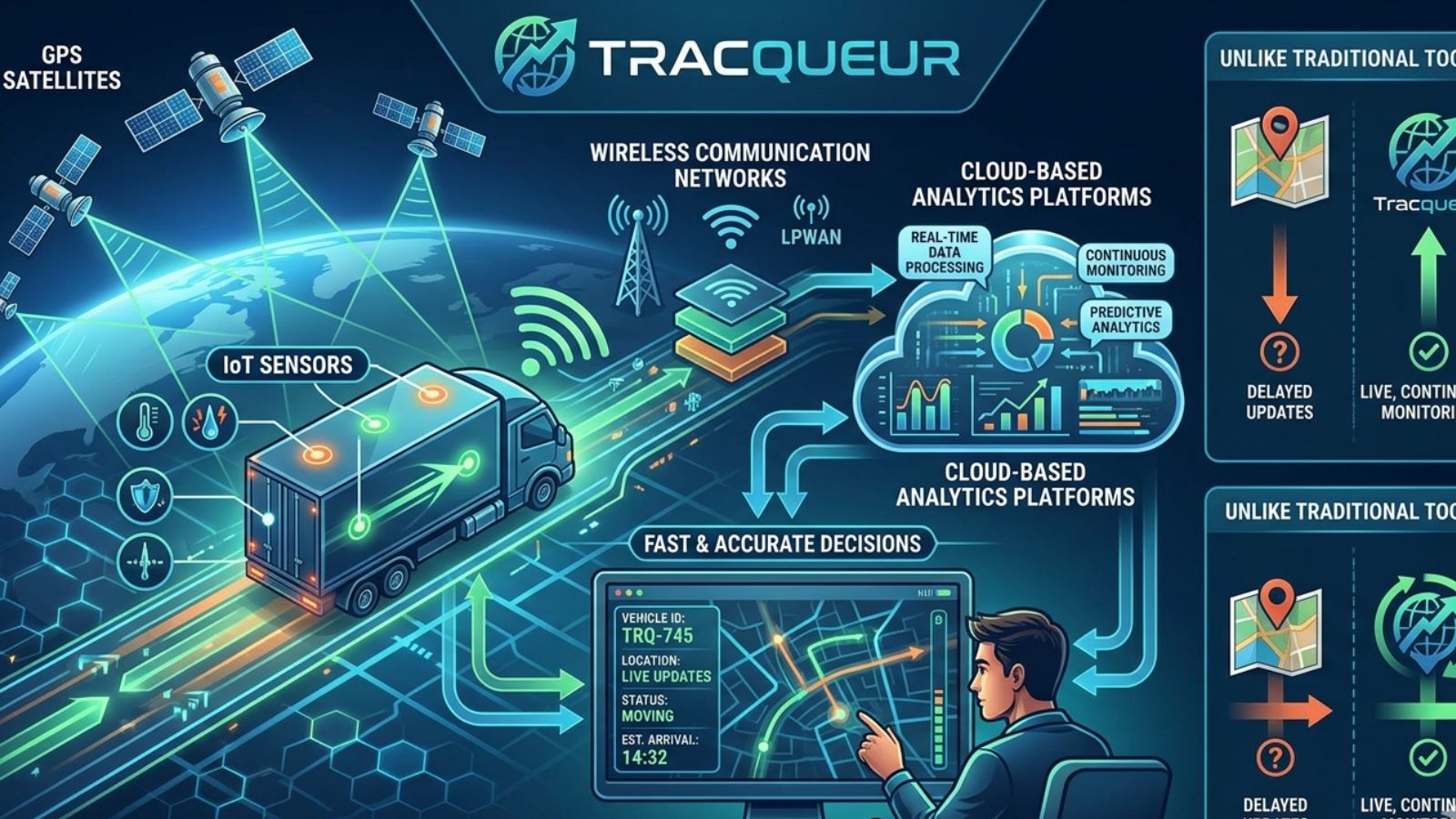
Tracqueur is a modern tracking technology system designed to provide real-time location and movement data using a combination of:
- GPS satellites
- IoT sensors
- Wireless communication networks
- Cloud-based analytics platforms
Unlike traditional tracking tools that only show location updates after delays, Tracqueur delivers live, continuous monitoring, allowing users to make fast and accurate decisions.
It is widely used in:
- Fleet management
- Logistics and supply chain operations
- Healthcare monitoring systems
- Personal safety and wearable devices
- High-value asset tracking
Also Read: Lamps4U Guide: 7 Green Lighting Secrets [2026]
How GPS Tracking Works in Tracqueur
To understand Tracqueur, we first need to understand how GPS tracking works at its core.
1. Satellite Positioning System
At the heart of Tracqueur is the Global Positioning System (GPS), a network of satellites orbiting Earth.
These satellites:
- Continuously send signals to Earth
- Provide precise location data based on timing
- Allow devices to calculate exact positions
A Tracqueur device receives signals from multiple satellites and uses triangulation to determine its exact location.
d=vtd = vtd=vt
This simple relationship shows how distance is calculated using signal travel time (distance = velocity × time). GPS systems use extremely precise timing to calculate distance from satellites.
2. IoT Sensors and Device Integration
Tracqueur devices are not just GPS receivers—they are smart IoT-enabled devices.
They can include:
- Motion sensors
- Temperature sensors
- Fuel monitoring systems
- Health tracking sensors (for wearables)
These sensors collect additional data beyond location, giving a complete picture of what is happening in real time.
For example:
- A delivery truck can report location + fuel usage
- A patient wearable can track location + heart rate
- A shipment can report location + temperature conditions
3. Real-Time Data Transmission
Once data is collected, Tracqueur devices send it through communication networks such as:
- 4G/5G mobile networks
- Wi-Fi connections
- Satellite communication systems
This data is transmitted to a central cloud system where it is processed instantly.
This is what enables real-time tracking dashboards used by companies and individuals.
4. Cloud-Based Tracking Dashboard
The data collected is displayed in an online platform or mobile app.
Users can:
- See live location on maps
- Track movement history
- Set alerts and geofencing boundaries
- Monitor performance metrics
This dashboard is the “brain” of the Tracqueur system.
5. Geofencing and Smart Alerts
One of the most powerful features of Tracqueur is geofencing.
Geofencing allows users to create virtual boundaries on a map. When a tracked object enters or leaves this area, the system sends instant alerts.
Examples:
- A truck leaving a delivery zone
- A child exiting a safe area
- An asset moving outside authorized locations
This feature improves security and control significantly.
Types of Tracqueur Devices
Tracqueur technology comes in different forms depending on use cases:
1. GPS Trackers
Used in vehicles, fleets, and personal devices to provide real-time location data.
2. RFID Tags
Used for inventory and warehouse tracking, especially in logistics.
3. Wearable Trackers
Used in healthcare and personal safety applications.
4. Asset Trackers
Used for high-value goods like electronics, containers, and machinery.
Each type serves a different purpose but follows the same core tracking principles.
Benefits of Tracqueur Technology
Tracqueur offers several major advantages across industries:
1. Real-Time Visibility
Users always know where assets, vehicles, or individuals are located.
2. Improved Efficiency
Logistics companies can optimize routes and reduce delays.
3. Cost Reduction
Better fuel usage, reduced theft, and optimized operations save money.
4. Enhanced Security
Instant alerts help prevent theft and unauthorized movement.
5. Better Decision Making
Live data allows companies to make faster and smarter decisions.
Challenges and Limitations
Despite its advantages, Tracqueur also has some challenges:
1. Privacy Concerns
Tracking individuals raises ethical and legal questions about privacy.
2. Data Security Risks
Since data is stored online, it can be vulnerable to cyberattacks if not properly secured.
3. Device Limitations
Battery life, signal loss, and hardware durability can affect performance.
4. Network Dependency
Weak internet or satellite signals can reduce tracking accuracy.
Future of Tracqueur Technology
The future of Tracqueur is closely linked with emerging technologies like AI, machine learning, and smart automation.
In the coming years, we can expect:
- AI-powered predictive tracking (predicting movement before it happens)
- Smarter supply chain automation
- Integration with autonomous vehicles
- Advanced healthcare monitoring systems
- Fully automated logistics networks
Tracqueur is becoming more than just a tracking tool—it is evolving into a complete intelligent monitoring ecosystem.
Final Thoughts
Tracqueur represents a major step forward in how we understand location tracking and data monitoring. By combining GPS, IoT, and real-time analytics, it transforms raw location data into actionable intelligence.
From improving business efficiency to enhancing personal safety, its applications are wide and growing rapidly. However, like any powerful technology, it must be used responsibly, especially when it comes to privacy and data protection.
As we move deeper into 2026 and beyond, Tracqueur is set to become a core component of smart cities, smart logistics, and smart living systems.
FAQs About Tracqueur
1. What is Tracqueur used for?
Tracqueur is used for real-time tracking of vehicles, assets, and people in industries like logistics, healthcare, and personal safety.
2. How does Tracqueur GPS tracking work?
It works by receiving signals from multiple GPS satellites, calculating location using triangulation, and sending data to a cloud-based system.
3. Is Tracqueur only for businesses?
No, it is also used for personal safety, wearable devices, and small-scale asset tracking.
4. What are the main types of Tracqueur devices?
The main types include GPS trackers, RFID tags, wearable devices, and asset tracking systems.
5. What are the risks of using Tracqueur?
The main risks include privacy concerns, data security issues, and dependency on network connectivity.